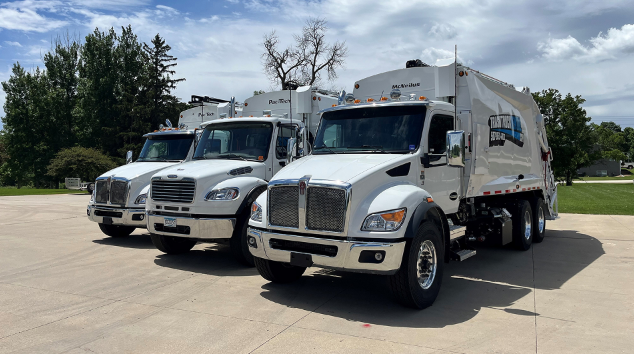

A Clayton County fleet manager left a packer truck parked behind his shop for nineteen days last spring, waiting on one backordered hydraulic cylinder. The route still ran, on a rented spare, at a daily rate that would have covered the part twice over. Nobody at the dealer counter ever called him back. Fleets that treat heavy duty truck parts atlanta ga as a market rather than one counter get trucks moving again faster. That is the argument here: a mix of new, used, remanufactured and rebuilt sourcing beats loyalty to one supply line.
Waiting On The Dealer Is A Choice
The dealer counter is one channel of several, and it is rarely the quickest one. Job after job, the part that strands a refuse truck turns out to be completely ordinary. A hydraulic cylinder, an injection pump, a water pump on a Cummins that passed 400,000 miles two winters ago. None of those parts are rare, and none of them should take three weeks. What makes them scarce is one order desk with one lead time, and a maintenance manager who never calls anyone else. Replacing the tired truck instead is not the cheaper answer either. A Forbes analysis in April 2026 found that tariffs on imported components leave heavy trucks assembled in the United States carrying roughly a 3% cost premium against USMCA-compliant models built in Mexico.
See also: I Priced Out Oxytocin Online and Found the Cheap Option Wasn’t Actually Cheap
New Is Not Always The Smart Part
Remanufactured and rebuilt units are not second rate, and on a high-mileage chassis they often win outright. If a component is not safety critical and the chassis has already cleared 400,000 miles, a reman or sound used unit usually wins on price and availability. If it stops the truck or carries load, buy new and buy to specification. A part that arrives Thursday beats a better part that shows up in three weeks. Rebuilt injection pumps and fuel system components make that case about as plainly as it gets. A supplier of heavy duty truck parts atlanta ga fleets rely on should tell you which of the four options fits your truck, and why, in one phone call.
Cheap Safety-Critical Parts Cost More Later
Brakes, steering and load-bearing hydraulics are the exception, and there is no clever way around it. Never substitute uncertified parts on those systems to save money; buy components that meet original equipment specification. Under 49 CFR 393.52, a loaded single-unit truck over 10,000 pounds must stop from 20 mph within 35 feet and develop braking force of at least 43.5% of gross weight. A packer that cannot hold that is out of service, whether or not anyone has noticed. What I cannot tell you is what a bargain brake part costs a fleet over five years, because nobody tracks one component from truck to truck that closely.
A Smarter Parts Plan Week By Week
Start with the trucks themselves rather than with a parts catalog. In the first week, pull the last twelve months of downtime and mark which failures repeated across the fleet. By week three you should have a short list of parts worth holding on a shelf. A second list covers what you will always special order, and that is where a one to two business day sourcing promise earns its keep. Within 90 days the repeat offenders on a dozen-truck fleet are obvious enough to plan around. Know the loads too, because a roll-off working demolition sites wears differently than a residential packer. The EPA reports that demolition generates more than 90 percent of all construction and demolition debris, with construction responsible for less than 10 percent.
Source Ahead To Keep Trucks Moving
That nineteen-day truck went back on route the week its manager finally called a second supplier, who had a rebuilt cylinder on the shelf. The cylinder had been on borrowed time for a year, which is the part worth keeping: the failure was predictable, the wait was not. Build the parts plan around that assumption rather than around one supplier’s promises. Keep a parts department that stocks deep, sources what it does not stock, and says plainly when new is the only right answer for a dozen high-mileage trucks past warranty.


 By
By

 By
By
 By
By