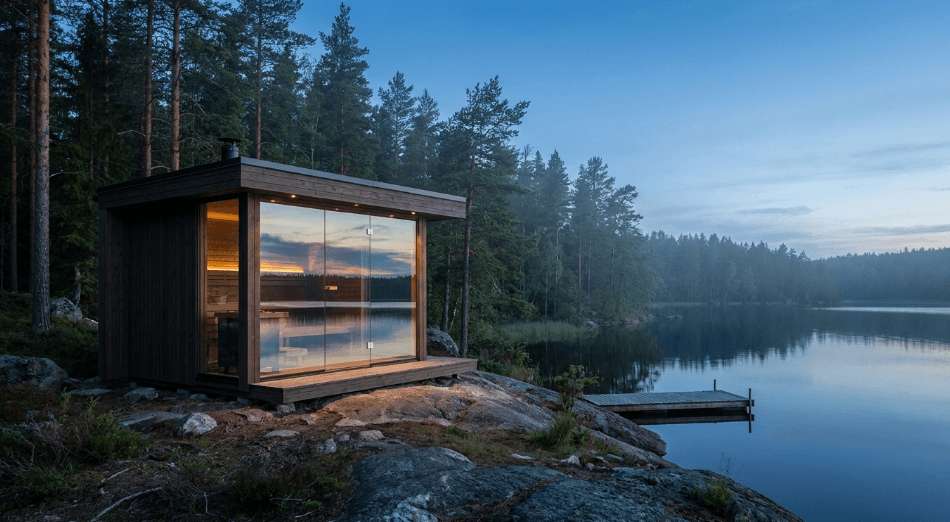

The outdoor sauna a family keeps using for years is almost always a mid-size cedar cabin, 4 to 6 person capacity, with an electric heater on a timer and a bench layout that seats more people than it beds down flat. Oversized units and complicated wood-fired setups are the ones that end up unused after the first winter. Getting size, heat source, and placement right on the first purchase is what decides whether a sauna becomes a weekly habit or an expensive yard fixture.
What size actually gets used every week?
It is tempting to buy the largest cabin that fits the yard, but bigger interiors take longer to heat, cost more to run, and often sit empty because only two people show up on a Tuesday night. A 6×6 foot cabin with an L-shaped bench comfortably seats four adults and reaches temperature in 30 to 45 minutes with a 6kW heater. Families who regularly host more than four people are better off with a 6×8 or 6×9 layout than jumping straight to an 8-person barrel, since the rectangular cabin uses floor space more efficiently than a curved shell of the same footprint.
Ceiling height matters more than most first-time buyers expect. Anything under 6 foot 4 inches feels cramped for taller adults standing to towel off, and low ceilings trap the hottest air right where people’s heads are. Look for at least 75 to 78 inches of interior clearance if anyone in the household is over six feet tall.
Wood-burning or electric: which one survives daily use?
Electric heaters are the practical choice for households that want to use the sauna on a weeknight without planning ahead. A 6 to 9kW electric unit on a 220-volt circuit heats a mid-size cabin in under 45 minutes and holds a steady temperature with a digital controller, so nobody has to babysit a fire. Wood-burning heaters produce a drier, more intense heat that traditionalists prefer, but they need seasoned firewood on hand, a properly flashed chimney, and 45 to 60 minutes of active tending before the cabin is usable. For a household sauna that gets used on a random Tuesday rather than a planned weekend event, electric wins on convenience almost every time.
Running cost is modest either way. A 6kW electric heater used for one hour typically adds 60 to 90 cents to a power bill at average residential rates, which is cheap enough that cost rarely decides the debate. The real deciding factor is whether someone in the house actually wants the ritual of building a fire.
Where should it sit in the yard?
Placement determines how often a sauna gets opened. A cabin tucked at the back of the property, past a gate and down a dark path, gets used far less than one visible from the back door with a lit walkway. Position it on a level pad, ideally concrete or compacted gravel, with at least 12 inches of clearance on the sides for airflow and heater venting, and keep the door facing away from prevailing wind so cold air does not blast in every time someone enters.
Budget matters here too, and shoppers comparing options across brands and configurations before committing to a footprint often start with a general online https://sweatdecks.com collection to see current sizing and heater pairings before measuring their own yard. A pre-fabricated cabin typically runs $4,500 to $9,000 fully equipped, while a barrel of comparable capacity is often 15 to 20 percent less due to lower material use in the curved shell.
What features do beginners overpay for?
Bluetooth speakers, chromotherapy lighting, and glass-front doors look good in catalog photos but add cost without adding much to the actual experience of sweating in a hot room. The features worth paying extra for are a stainless or ceramic-coated heater guard, a window for ventilation checks without opening the door, and pre-drilled bench slats in kiln-dried cedar or thermally modified aspen, which resist warping and splintering far better than untreated pine. Skip decorative add-ons on a first purchase and spend that money on a better heater or a proper foundation pad instead.
How do you keep the whole family using it, not just one person?
Saunas that become a shared household habit usually have a simple rule attached early: a set night or two per week, phones left outside, and a five-minute reminder before the heater kicks on. Households that treat the sauna as an occasional special-occasion item rather than a routine tend to stop using it within a season. A bench layout that seats three or four people upright, rather than one built mainly for lying down, makes it easier for the whole family or a couple of neighbors to use it together, which is often what keeps the habit alive past the first few months.
What maintenance should a family expect?
A cedar or aspen cabin needs surprisingly little upkeep if it is built with rot-resistant wood and a sloped roof that sheds water. Wipe down benches after each use, leave the door cracked for 20 to 30 minutes to let the interior dry, and vacuum loose debris off the floor every week or two. Once or twice a year, check the heater’s stone bed for cracked rocks and replace any that have split from repeated heating and water contact, since cracked stones hold less heat and can throw small fragments when water hits them. Exterior wood benefits from a UV-protective oil every one to two years depending on sun exposure, though many owners let cedar weather naturally to a silver-gray patina without any real loss of function.
Electrical components need almost no attention beyond an annual visual check of the heater’s wiring and control panel for a home with a hardwired 220-volt line. Households that skip this step rarely run into problems within the first five to seven years, but it is worth five minutes before the coldest months when the heater sees its heaviest use.
Frequently Asked Questions
How many people should an outdoor sauna fit for a family?
Most households are best served by a 4 to 6 person cabin, roughly 6×6 to 6×8 feet inside. That gives two adults room to lie down and still seats four upright, which matters more than a bigger footprint most families never fill.
Is a wood-burning or electric heater better for a first outdoor sauna?
Electric heaters are easier for beginners because they reach a set temperature automatically and need only a dedicated circuit. Wood-burning heaters give a more traditional heat and smell but require chopped wood, a flue, and more supervision while lit.
How long does a home sauna session usually last?
Most sessions run 10 to 20 minutes at 150 to 175 degrees Fahrenheit, often repeated two or three times with cool-down breaks between rounds. Beginners should start shorter and build tolerance over several weeks.
Do outdoor saunas need a permit before installation?
Many municipalities require an electrical permit for a hardwired heater and sometimes a building permit for a permanent structure over a certain size. Check local codes before ordering, since requirements vary widely by county.
References
- Hussain, J. et al. “Cardiovascular and Other Health Benefits of Sauna Bathing: A Review of the Evidence.” Mayo Clinic Proceedings, 2018. https://pubmed.ncbi.nlm.nih.gov/30077204/
- “Clinical Effects of Regular Dry Sauna Bathing: A Systematic Review.” Evidence-Based Complementary and Alternative Medicine, 2018. https://pubmed.ncbi.nlm.nih.gov/29849692/
- “Benefits and risks of sauna bathing.” The American Journal of Medicine, 2001. https://pubmed.ncbi.nlm.nih.gov/11165553/
- Harvard Health Publishing. “Saunas and your health.” https://www.health.harvard.edu/staying-healthy/saunas-and-your-health

 By
By

 By
By
 By
By